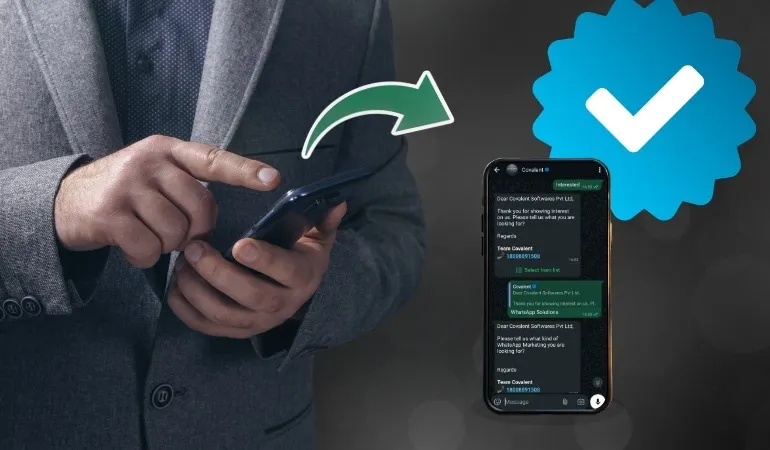
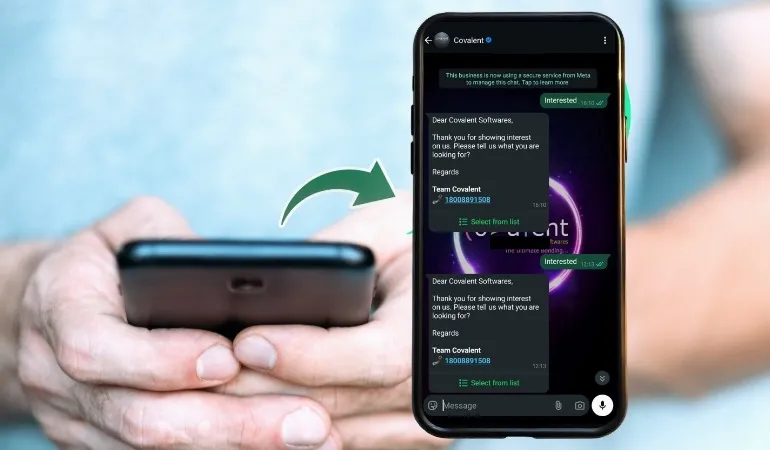
Get WhatsApp Blue Tick Verified with 10% off
You know that feeling when a customer pings you, and you’re already knee-deep in ten other chats? Multiply that by a few hundred and you’ve got what most large businesses deal with every single day. It’s a mess — or at least it used to be.
The normal WhatsApp Business app? Great for a small shop. Totally overwhelmed when you’ve got teams in multiple cities and customers firing questions non-stop. The WhatsApp Business API? That’s the jump from a little street to a highway with no traffic lights. You can actually keep up.
Why this matters
Before the API, I’ve seen companies literally running five or six phones at once just to answer messages. And that’s not an exaggeration. It was clumsy, slow, and stuff fell through the cracks. Customers hate waiting, and here they were waiting hours.
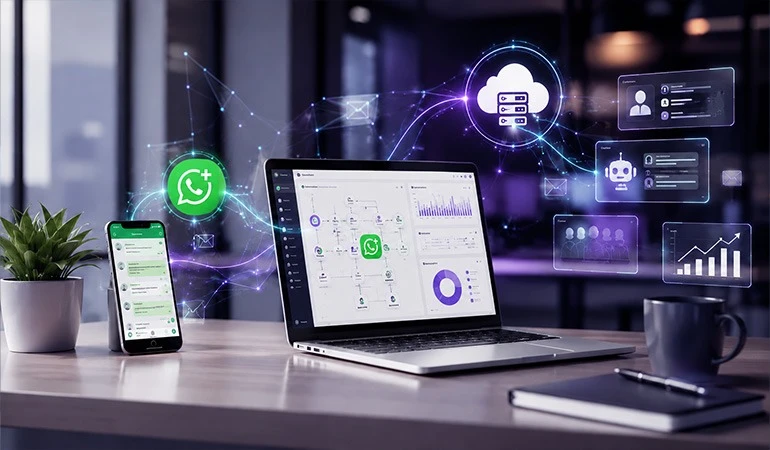
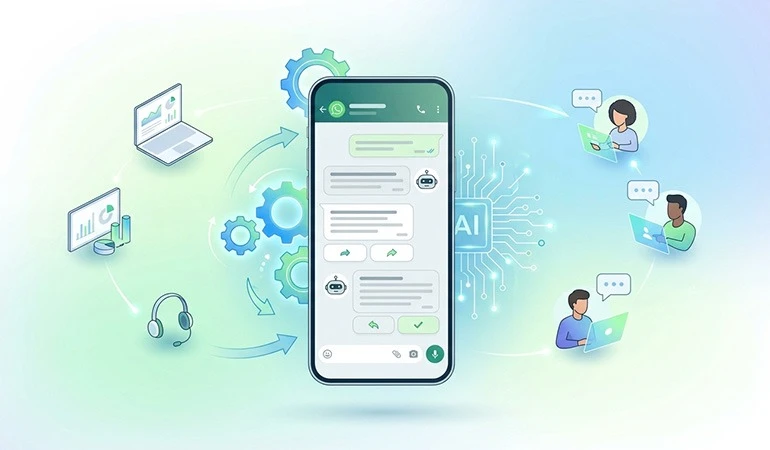
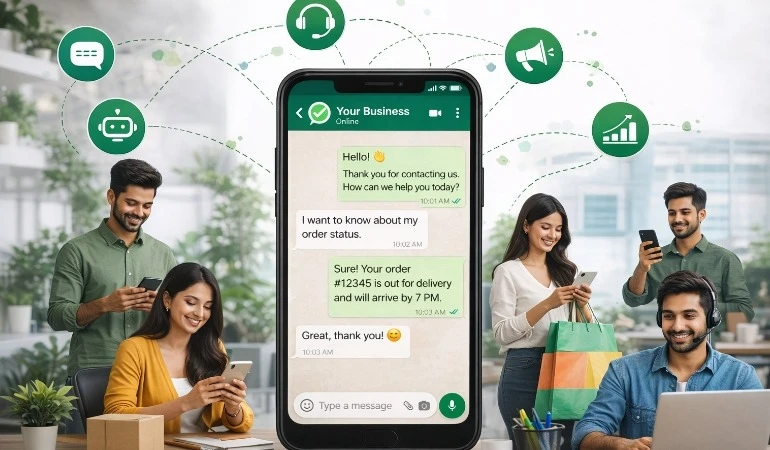
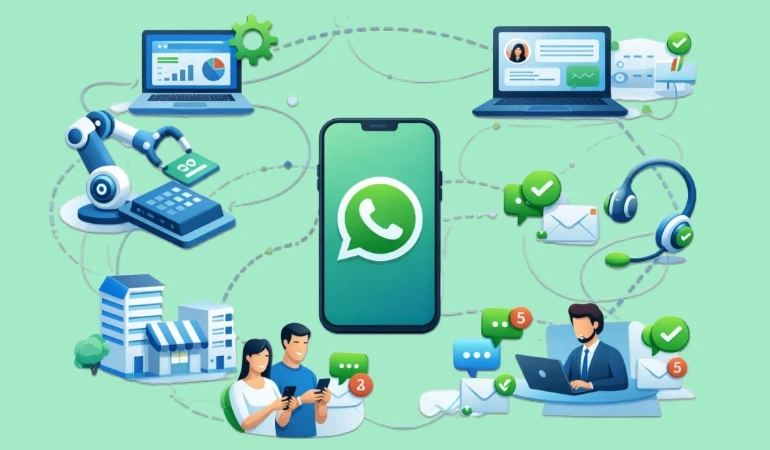
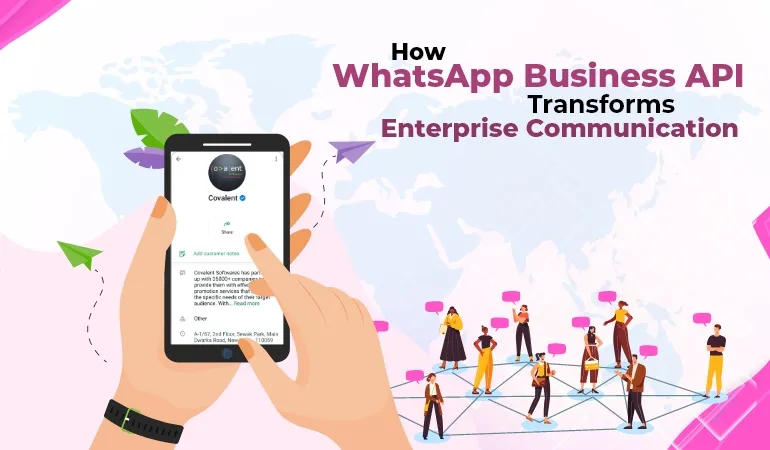
With the API, all those chats funnel into one system. Your sales guy in Mumbai, your support lead in Pune, and your marketing intern in Delhi can all talk to customers — at the same time — without stepping on each other’s toes.
In real life
Imagine you’re a big travel company:
A family in Goa is asking about last-minute holiday packages.
A corporate group in Hyderabad wants bulk booking info.
Someone in Kochi is freaking out about a misplaced booking ID.
Before? That’s chaos.
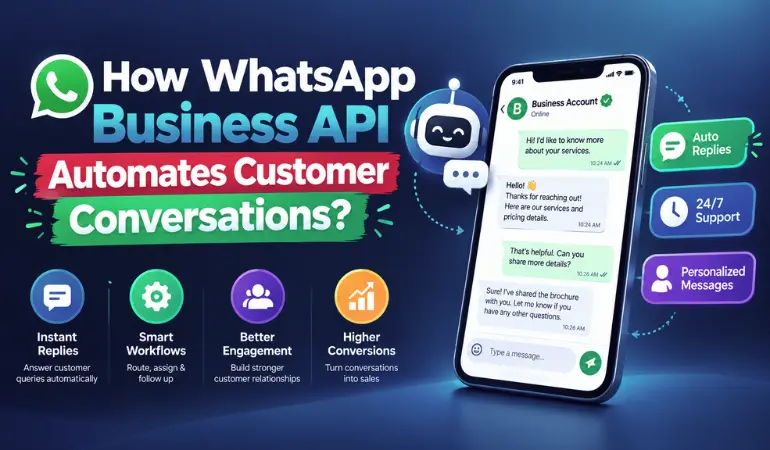
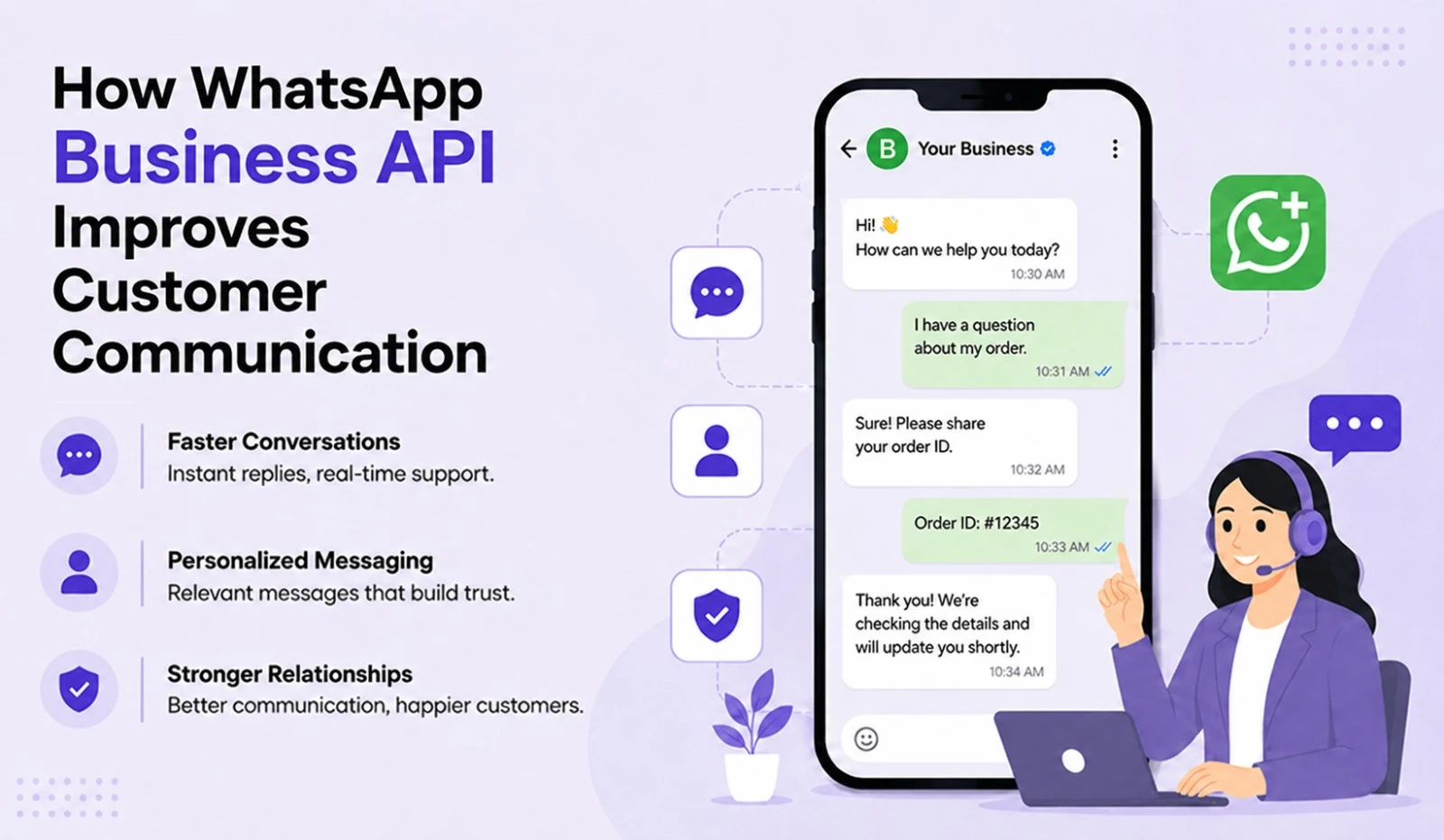
Now? They all get replies in seconds. Some from live agents, others from automated quick-reply templates. Either way, no “sorry for the delay” messages.
Why not stick to email or calls?
Honestly, people check WhatsApp way more than their inbox. And phone calls… well, try calling a Gen Z customer and see how that goes. Messaging feels instant, it’s familiar, and nobody’s stuck listening to hold music.
Security side of things
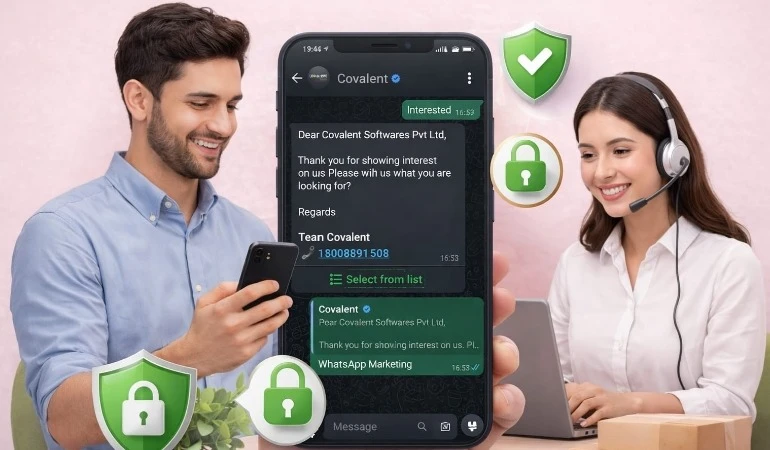
Large businesses can’t play loose with data. The API is locked down with end-to-end encryption, so chats stay private. And because it’s built with compliance in mind, it works fine even for banks and healthcare companies.
The way forward
Look at airlines, retail chains, even hospitals — all shifting a chunk of their customer service to WhatsApp. And this is just the beginning. Give it a few years, and this will be less of a “cool new tool” and more like having a company email address.
FAQs
Because handling hundreds of chats across multiple cities becomes chaotic and unmanageable on a single mobile app.
It funnels all chats into one system, allowing multiple team members to reply simultaneously without confusion.
Customers check WhatsApp more frequently, and messaging feels faster and more convenient than emails or phone calls.
Yes, the API offers end-to-end encryption and compliance-friendly systems suitable for sensitive industries.
Quick-reply templates and automated responses ensure customers receive instant replies without long waiting times.