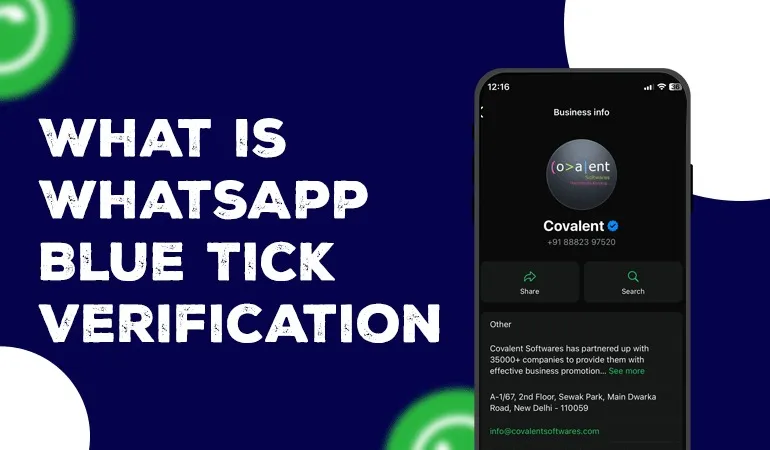
Get WhatsApp Blue Tick Verified with 10% off

WhatsApp has become one of the most important communication channels for businesses. Customers use it to ask questions, place orders, request support & interact with brands directly.
As business communication on WhatsApp has grown, the WhatsApp blue tick verification has also attracted considerable attention. Many businesses believe that getting a blue badge automatically increases sales, guarantees customer trust or improves message delivery.
There are several misconceptions around WhatsApp verification. Understanding what the badge actually means can help businesses make better decisions about their WhatsApp communication strategy.
Blue Tick Verification vs Message Read Receipts
These are two completely different things.
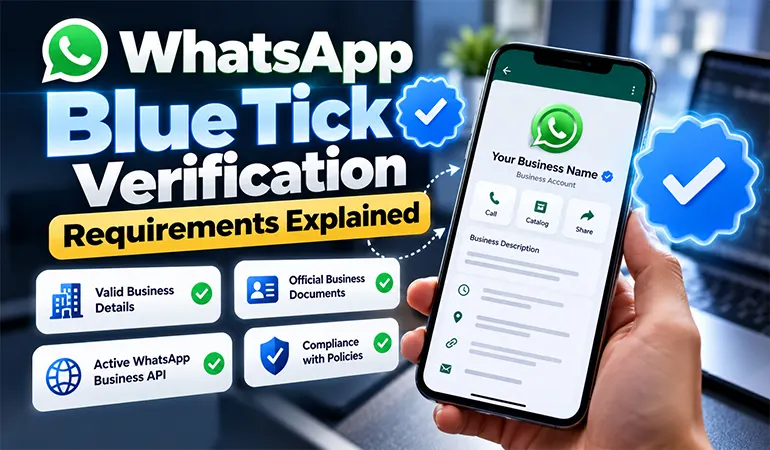
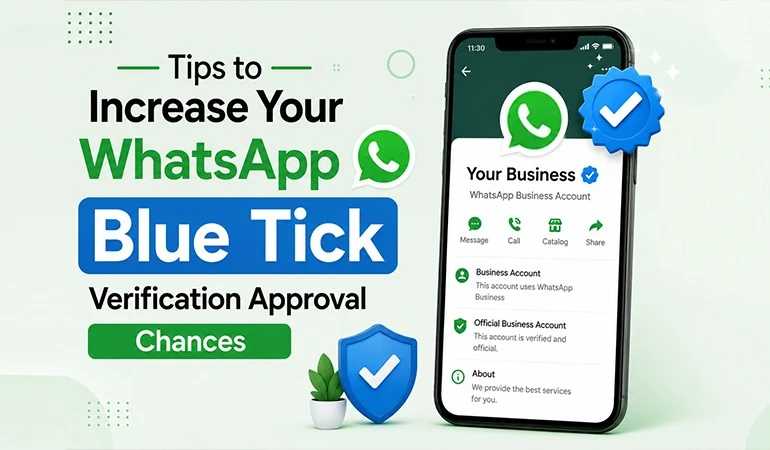
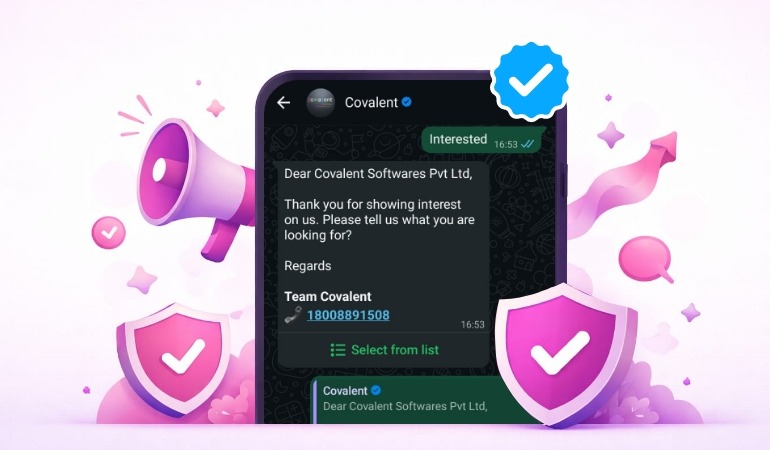
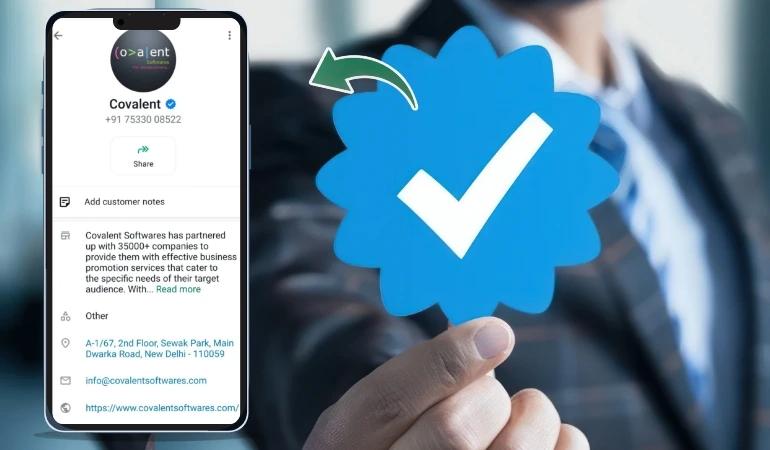
Verification badge: Indicates an authenticated business identity.
Blue message ticks: Indicate that a message has been read, depending on the user's privacy settings.
Verification does not mean every message will receive blue read ticks.
Read receipts do not prove that a business account is verified.
This distinction is one of the biggest sources of confusion around WhatsApp.
Why Does WhatsApp Verification Matter for Businesses?
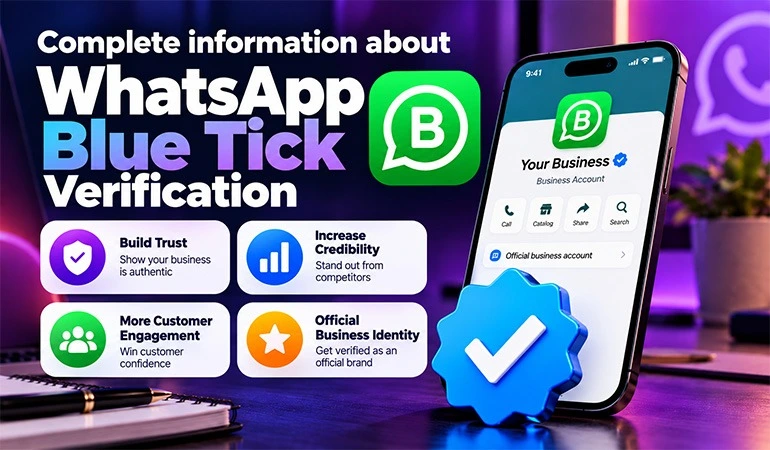
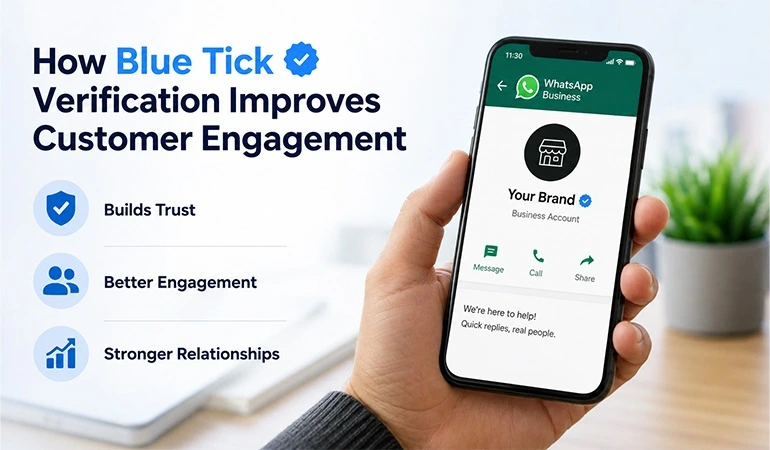
Customers are increasingly careful about who they communicate with online. A verified business identity can provide an additional signal that the account belongs to a genuine brand.
For businesses, this can be useful when communicating with new customers who may not already know the official WhatsApp number.
Verification can support:
Brand credibility
Customer confidence
Protection against impersonation
Recognition of an official business account
More professional customer communication
A verification badge alone, however, cannot replace good customer service, transparent business information or reliable communication.
WhatsApp Blue Tick Verification Myths and Facts
Myth 1: Every Business Can Automatically Get a Blue Tick
Fact: WhatsApp verification is not an automatic feature available simply because a business has a WhatsApp Business account.
Eligibility and approval depend on the applicable Meta and WhatsApp requirements. Businesses may need to meet certain criteria before they can obtain verification.
Having a registered company does not necessarily mean that verification will be approved.
Myth 2: A Blue Tick Guarantees More Sales
Fact: Verification can improve credibility, but it does not guarantee conversions.
A customer may feel more comfortable communicating with an authenticated business, but purchasing decisions depend on many other factors.
These include:
Product quality
Pricing
Customer reviews
Response time
Offers
Website experience
Sales process
Customer support
The badge can support trust. It is not a sales guarantee.
Myth 3: Verification Automatically Improves Message Delivery
Fact: A verification badge should not be treated as a guarantee of message delivery.
WhatsApp messaging performance depends on factors such as message quality, user engagement, business practices, applicable messaging policies & customer interactions.
A verified business still needs to follow WhatsApp's policies and maintain healthy communication practices.
Myth 4: Verification Means WhatsApp Endorses the Business
Fact: Verification primarily helps establish the authenticity of a business account.
It should not be interpreted as a recommendation of the company's products, services, pricing or business practices by WhatsApp.
Customers should still evaluate a company independently before making a purchase.
Myth 5: The Blue Badge Makes a Business Immune to Restrictions
Fact: Verification does not provide immunity from WhatsApp policies.
Businesses are still expected to follow applicable rules regarding messaging, customer consent, content, spam & platform usage.
A verified account can still face restrictions if it violates relevant requirements.
Myth 6: Buying a Blue Tick From a Third Party Is Safe
Fact: Businesses should be extremely careful with anyone claiming they can sell or guarantee official WhatsApp verification.
Official verification should be pursued through legitimate Meta and WhatsApp processes.
Giving account credentials, verification codes or sensitive business information to unknown providers can create unnecessary security risks.
What Does WhatsApp Verification Actually Help With?
The strongest value of verification is usually related to identity and trust.
Imagine a customer searches for a popular brand on WhatsApp and finds multiple accounts using similar names or logos. An authenticated business identity can make it easier for customers to distinguish the official account.
For larger brands, this distinction can become particularly important because impersonation attempts can damage customer confidence.
Businesses should therefore look at verification as one part of a broader digital communication strategy.
Use Case 1: E-commerce Brand
An online fashion brand receives hundreds of WhatsApp inquiries every week.
Customers ask about product availability, sizes, delivery timelines, returns & payment options. Because the brand is well known, fake accounts occasionally use similar names and logos.
A verified business identity can help customers recognize the legitimate account.
The business can then combine WhatsApp Business tools with structured customer support, product communication, order updates & follow-ups.
The result is a clearer communication experience where verification supports the brand's existing trust rather than trying to create trust on its own.
Use Case 2: Financial Services Business
Consider a financial services company that communicates with customers through WhatsApp.
Customers may receive information about appointments, service requests, documentation or account-related communication.
Because financial communication requires a high level of trust, customers may be cautious about responding to unfamiliar numbers.
An authenticated business presence can help customers identify the legitimate business account. The company should still use secure processes and never ask customers to share confidential credentials or sensitive information through inappropriate channels.
Case Study 1: Growing Retail Brand
A growing retail brand was receiving customer inquiries through several communication channels. WhatsApp generated strong interest, but customers were sometimes unsure whether they had contacted the official business account.
The company focused on establishing a consistent WhatsApp business identity and improving its customer communication process.
Instead of treating verification as a standalone marketing tactic, the business connected it with clear branding, faster responses, product information & customer support.
Over time, customers had fewer doubts about the authenticity of the account and the sales team had a more organized communication process.
The key lesson was simple: verification works best when it is supported by a reliable customer experience.
Case Study 2: Local Service Business
A local service company used WhatsApp to handle appointment requests and customer questions.
Its biggest problem was not a lack of inquiries. Customers often contacted the company but hesitated to continue the conversation because they were unsure whether the WhatsApp number was official.
The company improved its online business information and maintained a consistent identity across its digital channels.
It also introduced clearer WhatsApp communication for appointments, confirmations & customer support.
The verified business presence became another trust signal for customers who were discovering the company for the first time.
The lesson for similar businesses is that a badge can help reduce uncertainty, but the real improvement comes from combining authentication with consistent communication.
How HelloAll Can Help With WhatsApp Business Communication
Businesses looking to use WhatsApp professionally need more than an account and a phone number.
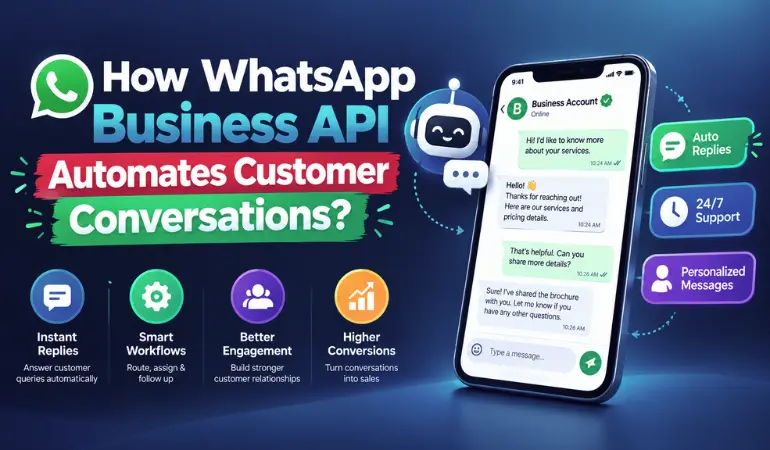
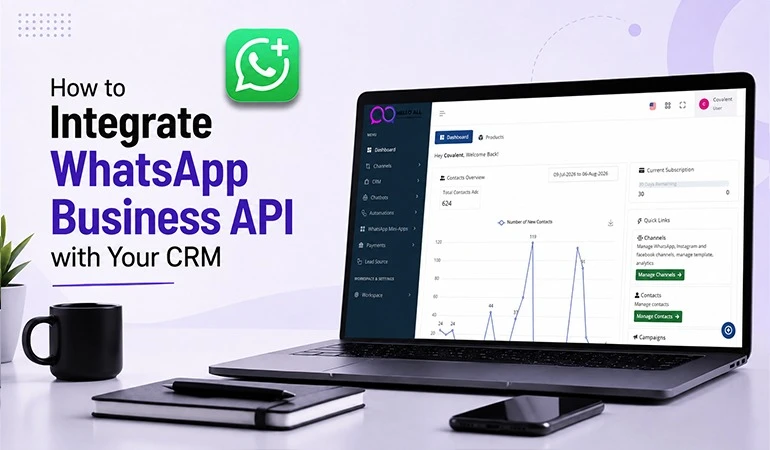
A proper WhatsApp strategy can include customer communication, automated responses, lead management, notifications, support workflows & campaign planning.
HelloAll helps businesses build structured digital communication solutions around their customer engagement requirements.
Before focusing on verification, businesses should first identify what they want WhatsApp to achieve.
For example:
Generate qualified leads
Handle customer inquiries
Send important notifications
Improve customer support
Manage conversations
Automate repetitive responses
Build a consistent business communication process
Once the objective is clear, the right WhatsApp solution becomes easier to plan.
Common Mistakes Businesses Make About WhatsApp Verification
Many businesses focus heavily on the badge while ignoring the fundamentals of customer communication.
Common mistakes include:
Assuming verification guarantees sales
Buying verification claims from unofficial sources
Confusing verification with read receipts
Ignoring WhatsApp messaging policies
Sending unwanted promotional messages
Using inconsistent business information
Treating verification as a replacement for customer service
Sharing sensitive account information with unknown providers
A professional WhatsApp strategy should focus on authenticity, customer consent, useful communication & consistent service.
FAQs
The business verification badge helps indicate that an eligible WhatsApp business account has been authenticated. It is different from the blue ticks that indicate message read status.
The availability, eligibility & pricing of verification can depend on the specific Meta offering and market. Businesses should check the current official process rather than relying on third-party claims.
Verification can contribute to customer confidence, particularly when customers are unfamiliar with a business. It does not guarantee more sales. Conversion still depends on the overall customer experience and sales process.
Yes. Verification does not remove a business from WhatsApp's applicable policies. Businesses must continue to follow platform requirements and responsible messaging practices.
No. They are completely different. Blue message ticks relate to read receipts, while the business verification badge relates to business authenticity.