Get WhatsApp Blue Tick Verified with 10% off
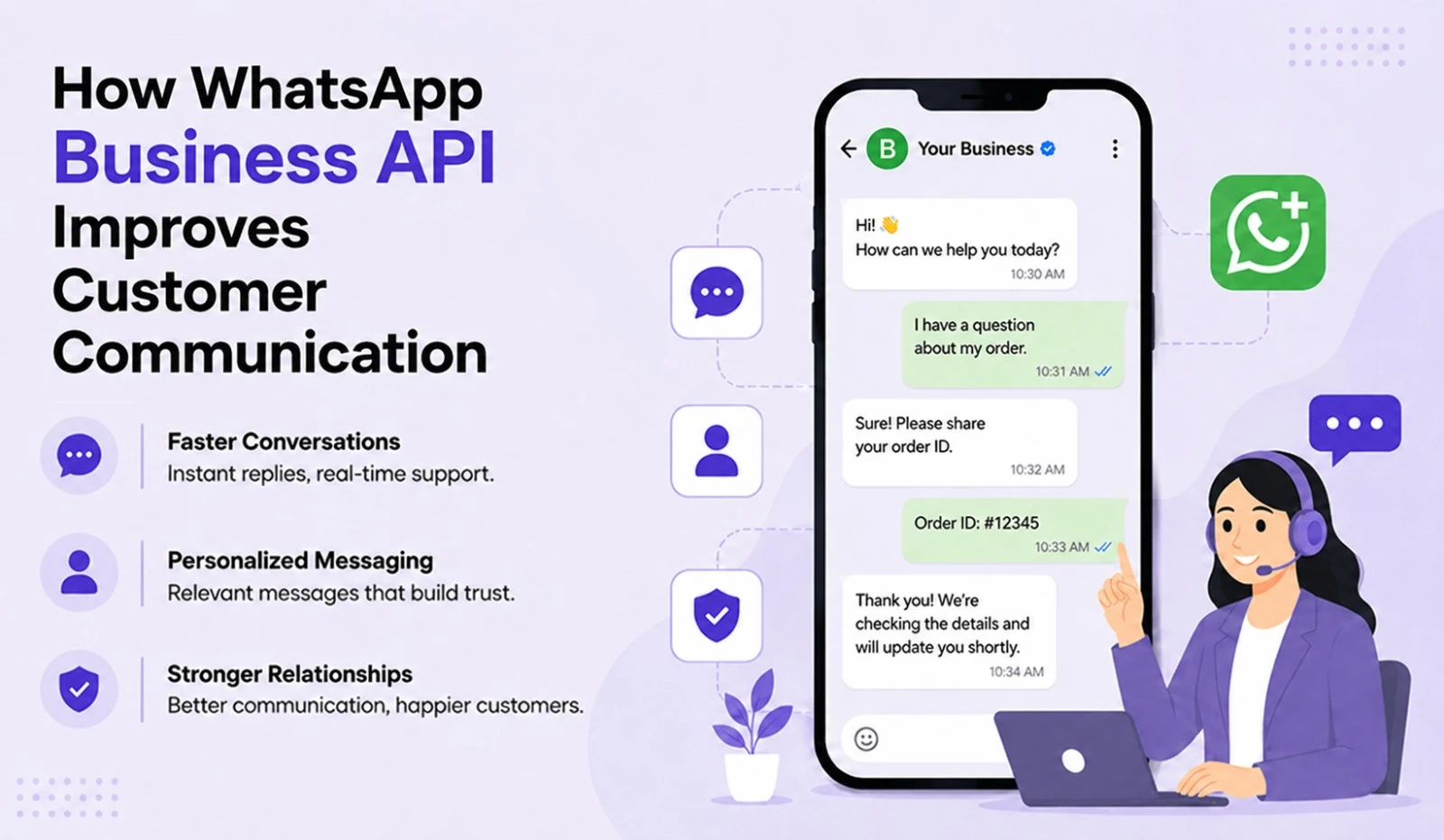
Customer communication has changed significantly. People expect businesses to respond quickly, provide useful information & make conversations convenient. Long waiting times, unanswered messages & complicated support processes can easily lead customers to look elsewhere.
This is where the WhatsApp Business API can make a practical difference. It helps businesses communicate with customers through a familiar messaging platform while supporting automation, notifications, customer support & sales conversations at scale.
For businesses using WhatsApp as an important communication channel, HelloAll provides an effective way to build more organised and responsive customer interactions.
How Is WhatsApp Business API Different From Regular WhatsApp?
The regular WhatsApp Business application is suitable for small businesses handling conversations manually. However, growing companies often need more automation and integration.
With the API, businesses can:
• Manage large volumes of customer conversations
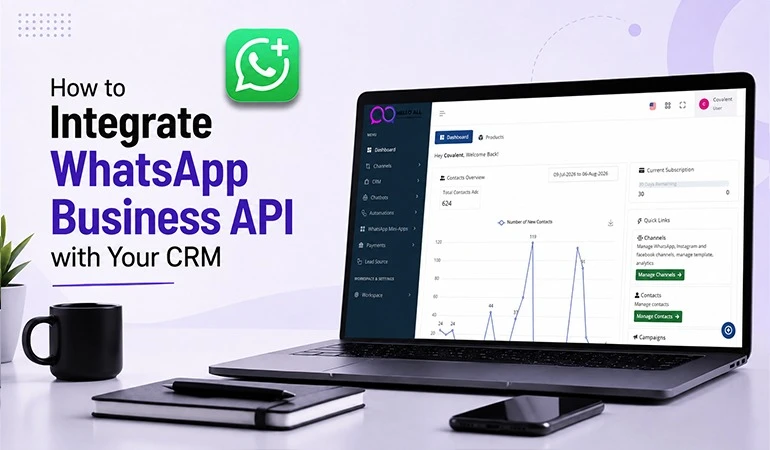
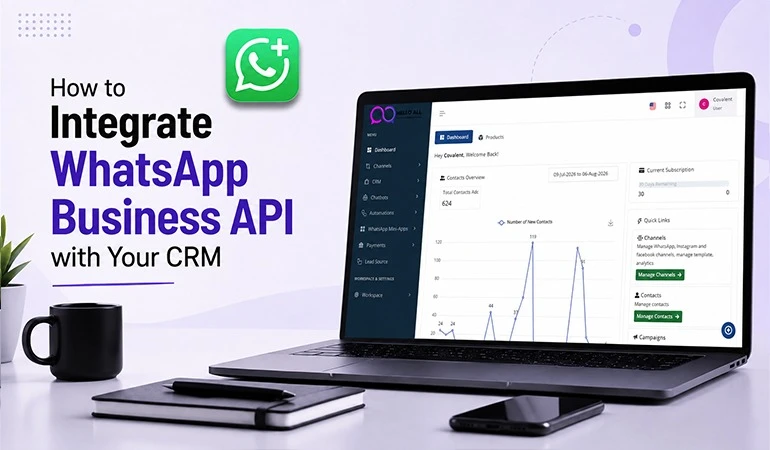
• Connect WhatsApp with CRM and business applications
• Automate frequently asked questions
• Send order and service notifications
• Route conversations to customer support teams
• Create automated customer journeys
• Track communication and response activity
• Support multiple agents and departments
This makes WhatsApp more than a simple messaging application. It becomes part of the company's customer communication system.
Why Customer Communication Matters for Business Growth
Customers usually remember how a business communicates with them. A useful response at the right time can remove doubts and help a customer complete a purchase.
Poor communication creates the opposite effect. Customers may abandon a purchase when they cannot get an answer about pricing, delivery, availability, payment or service details.
A strong communication system helps businesses provide:
• Faster responses
• Clear information
• Consistent service
• Convenient support
• Timely updates
• Personalised conversations
WhatsApp is especially useful because customers already use it regularly. They do not have to learn a new communication platform just to interact with a company.
How WhatsApp Business API Improves Customer Communication
1. Faster Customer Responses
Response time has a direct effect on customer experience. When a customer sends a message, they generally expect an answer within a reasonable period.
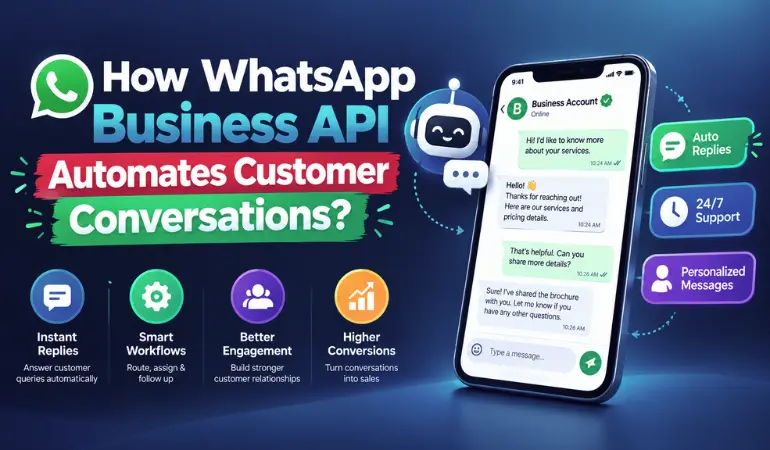
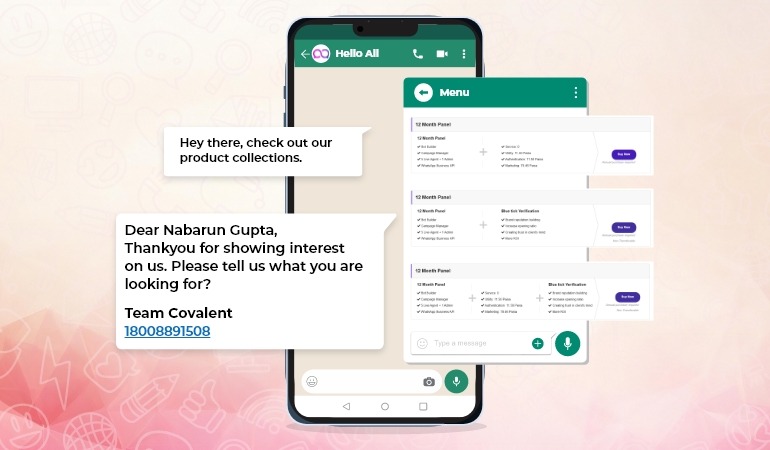
WhatsApp Business API allows businesses to automate initial responses and frequently requested information. Customers can receive an immediate acknowledgement while more complex queries can be transferred to a support representative.
For example, an automated message can provide business hours, service information, order status instructions, or commonly requested details.
2. Automated Customer Support
Customer support teams often answer the same questions repeatedly. Automation can handle many routine interactions before a human agent becomes involved.
A WhatsApp chatbot can answer questions related to:
• Product availability
• Pricing information
• Appointment schedules
• Order status
• Delivery updates
• Business hours
• Service details
• Frequently asked questions
This reduces repetitive work for support teams and gives customers quicker access to basic information.
3. Personalised Conversations
Customers respond better when communication is relevant to their situation.
Businesses can use customer information and CRM integrations to create more personalised conversations. For instance, a customer who has placed an order can receive information related to that particular order rather than a generic promotional message.
Personalisation can be used for:
• Order confirmations
• Appointment reminders
• Payment notifications
• Service updates
• Follow-ups
• Customer support
Relevant communication makes conversations more useful and easier to understand.
4. Timely Notifications
Customers often need updates after completing an action.
An online store may need to confirm an order. A hospital or clinic may need to remind patients about appointments. A service company may need to notify customers about technician visits.
WhatsApp Business API can support these types of notifications through approved message templates.
Timely updates reduce uncertainty and can also reduce the number of customers contacting support simply to ask for information.
5. Better Lead Follow-Up
Many businesses generate leads through websites, advertisements, social media & online forms. The challenge begins after the lead arrives.
If a sales team waits too long to follow up, potential customers may lose interest.
WhatsApp can help businesses create structured follow-up communication. A new enquiry can receive an immediate response, followed by relevant information and an option to speak with a sales representative.
This gives sales teams more time to focus on qualified conversations.
6. Human Support When Automation Is Not Enough
Automation should not handle every customer problem.
Some questions require explanation, negotiation, or personal attention. WhatsApp Business API allows automated workflows to transfer conversations to human agents when necessary.
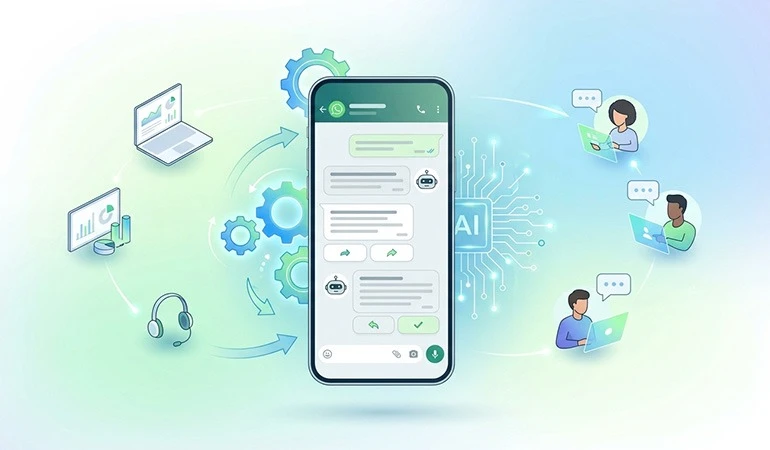
A typical process can look like this:
1. Customer sends a message.
2. Automated system identifies the request.
3. Basic information is provided instantly.
4. The customer selects the required option.
5. Complex queries are transferred to an appropriate agent.
6. The agent continues the conversation with the available customer context.
This creates a balance between automation and human support.
Use Case 1: E-Commerce Customer Communication
An online retailer can use WhatsApp Business API throughout the customer journey.
After an order is placed, the customer can receive an order confirmation. Further messages can provide shipping updates, delivery information & other relevant notifications.
Customers can also initiate conversations if they need assistance.
For example:
• Customer places an order
• WhatsApp confirmation is sent
• Shipping notification is delivered
• Delivery update is shared
• Customer contacts support if there is a problem
• Support agent handles the issue through WhatsApp
This reduces uncertainty and gives customers one familiar channel for important updates.
Use Case 2: Appointment-Based Businesses
Clinics, salons, consultants, educational institutions & service providers can use WhatsApp to manage appointment communication.
A customer can receive an appointment confirmation followed by a reminder before the scheduled time.
If the customer needs to change the appointment, the conversation can be routed to the appropriate team.
This can help reduce missed appointments while making the booking process easier for customers.
Case Study 1: Improving E-Commerce Order Support
Consider an online fashion retailer that receives hundreds of customer enquiries every day. Before introducing WhatsApp automation, its support team handled order-status questions manually.
Customers frequently contacted the company to ask whether their order had been shipped or when it would arrive.
The business introduced WhatsApp-based order notifications and automated responses for common questions.
Customers could now receive shipping updates without contacting an agent. When an unusual delivery problem occurred, the conversation could be passed to a support representative.
The result was a more organised support process, fewer repetitive enquiries & faster access to order information.
The important lesson is that automation worked best when it handled routine requests while human agents remained available for problems requiring individual attention.
Case Study 2: Faster Lead Follow-Up for a Service Business
Imagine a real estate company generating enquiries through online advertising. Its sales team received leads throughout the day, but some prospects had to wait before receiving a response.
The company connected its lead management process with WhatsApp. New prospects received an initial message containing basic information and an option to continue the conversation with a sales representative.
Prospects could also select what they were interested in, such as property type, location, or budget range.
The sales team received better-organised conversations and could prioritise prospects based on their requirements.
This approach helped the business make its lead follow-up more systematic while keeping the conversation on a platform customers already knew.
Benefits of WhatsApp Business API for Different Departments
WhatsApp Business API is not limited to customer support.
Sales Teams
Sales teams can use WhatsApp for enquiry follow-ups, product information, lead qualification & customer conversations.
Customer Support Teams
Support departments can manage common questions, service requests, complaints & escalations through organised WhatsApp workflows.
Marketing Teams
Marketing teams can use approved WhatsApp messages to communicate relevant offers, announcements & updates with customers who have provided the required consent.
Operations Teams
Operations departments can send important notifications related to deliveries, appointments, bookings, payments & service schedules.
How HelloAll Can Help Businesses Use WhatsApp More Effectively
Businesses need more than a WhatsApp number when their customer communication becomes complex.
HelloAll can be used as part of a structured WhatsApp communication strategy, helping businesses bring customer conversations, automation, notifications & support processes into a more organised system.
A business can begin by identifying its most common customer interactions and then deciding which conversations should be automated and which should be handled by human agents.
The goal should be simple: give customers useful information quickly while keeping human support available when it matters.
Best Practices for WhatsApp Business API Communication
Businesses should follow a customer-first approach when using WhatsApp.
Keep Messages Clear
Customers should understand the purpose of a message immediately. Avoid unnecessary information and complicated wording.
Provide Useful Actions
Where appropriate, messages should make it easy for customers to take the next step, such as checking an order, confirming an appointment, or contacting support.
Respect Customer Consent
Businesses should communicate with customers according to applicable WhatsApp and privacy requirements. Promotional communication should be sent only where the required permission has been obtained.
Know When to Involve a Human Agent
Automation is useful for routine questions. Difficult complaints, complex requests & sensitive customer situations should be handled by trained staff.
Monitor Communication Quality
Businesses should regularly review response times, unresolved conversations, customer questions & support performance. This helps identify where communication workflows need improvement.
Frequently Asked Questions About WhatsApp Business API
1. What is the main purpose of WhatsApp Business API?
+The main purpose is to help businesses communicate with customers at scale through WhatsApp. It supports automation, notifications, customer support, integrations & structured conversations.
2. Can WhatsApp Business API be connected with a CRM?
+Yes. WhatsApp Business API can be integrated with CRM systems and other business applications. This can help teams manage customer information and conversations more efficiently.
3. Can businesses automate WhatsApp customer support?
+Yes. Businesses can create automated workflows and chatbots for frequently asked questions and routine interactions. More complex conversations can be transferred to human agents.
4. Is WhatsApp Business API useful for lead generation?
+Yes. Businesses can use WhatsApp to respond to enquiries, qualify prospects, share information & connect leads with sales representatives. Faster follow-up can make the sales process more organised.
5. Can WhatsApp Business API send order and appointment notifications?
+Yes. Businesses can use approved message templates for relevant transactional and service notifications, such as order updates, appointment reminders & other customer communications.